Designing Email for Creators
Beacons helps creators build businesses. By 2023, thousands of creators were using our forms to collect emails, but had nowhere to send them. We saw a sharp drop-off: creators would export their lists into Mailchimp or ConvertKit (if they used them at all), or simply give up. These tools were too complex, too expensive, and not made for their needs.
Our insight: most creators don’t need a full-blown email marketing suite. They need a simple, friendly way to talk to their audience to send updates, drop product links, or announce a launch.
This wasn’t about catching up to the market. It was about building something new: email marketing, for people who’d never done it before.
The Strategy
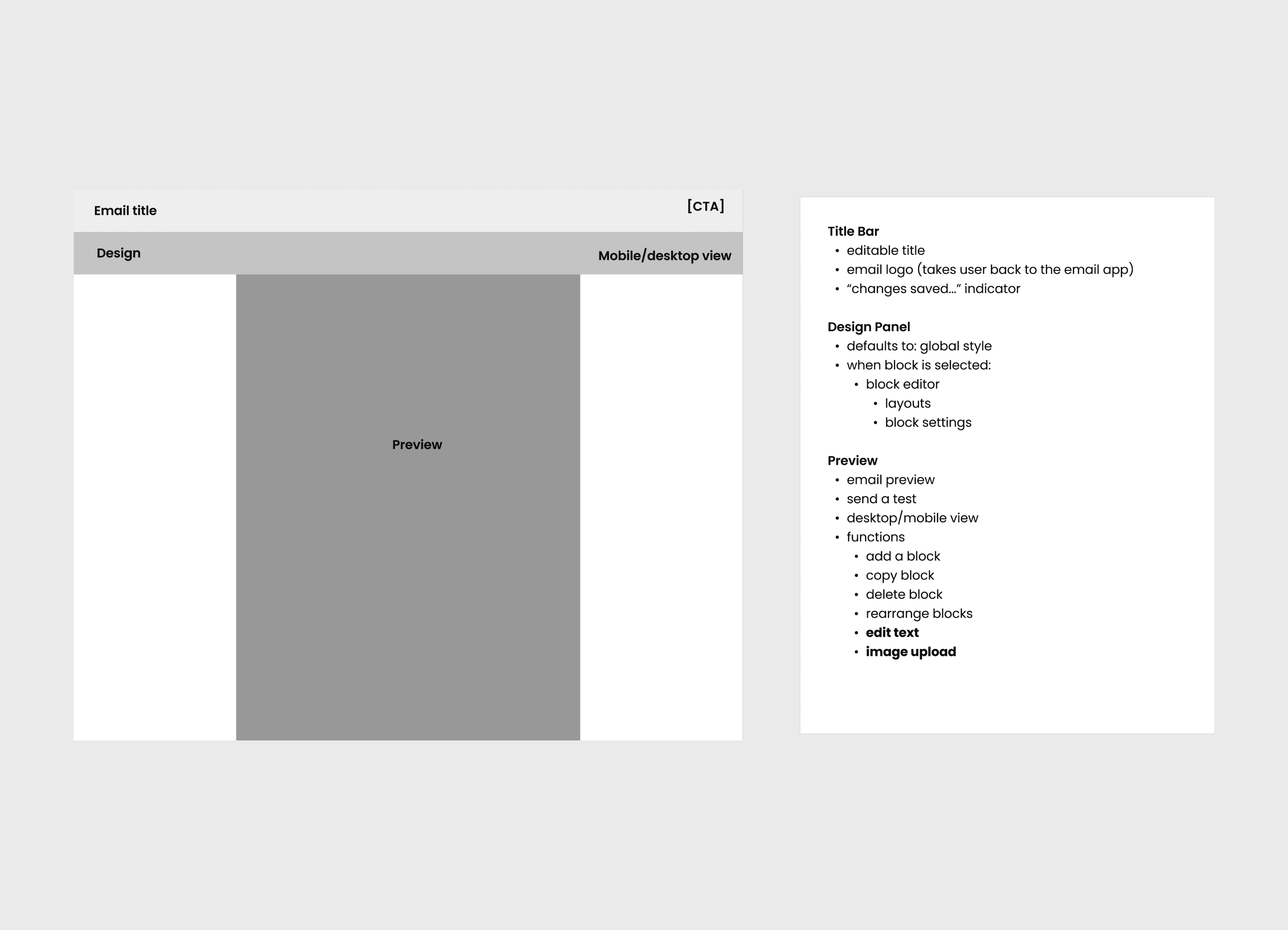
This was a true zero-to-one product. There was no roadmap, no pattern library, no internal email infrastructure to build on. We had to define the problem space, design the experience, and scope a product that could get to market fast and evolve with real usage.
I partnered closely with our PM and lead engineer from the very start, turning the high-level “let’s add email” idea into an MVP we could actually build:
No complicated logic builders
No multi-touch automations
No deliverability dashboard
Instead, we started small:
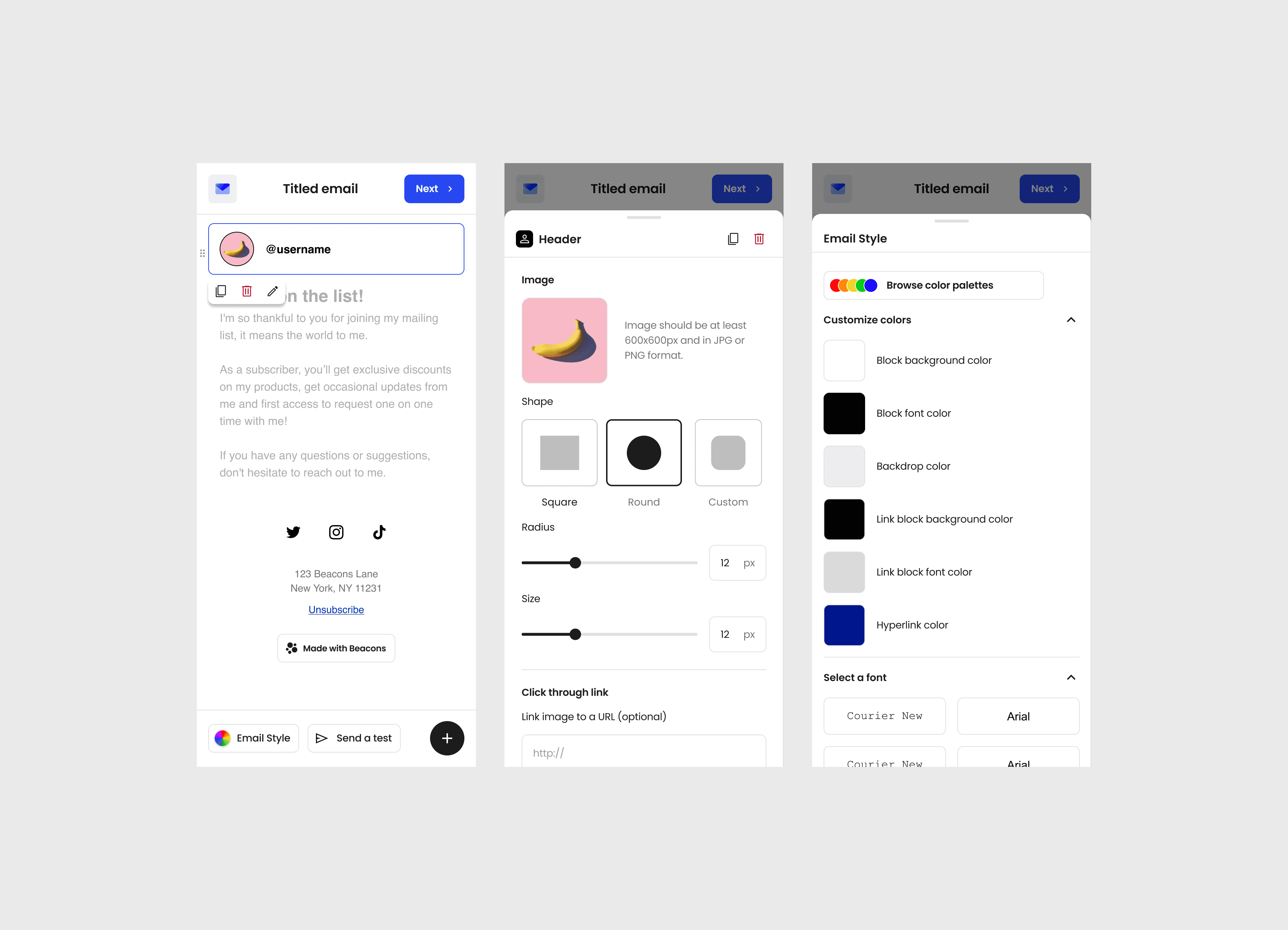
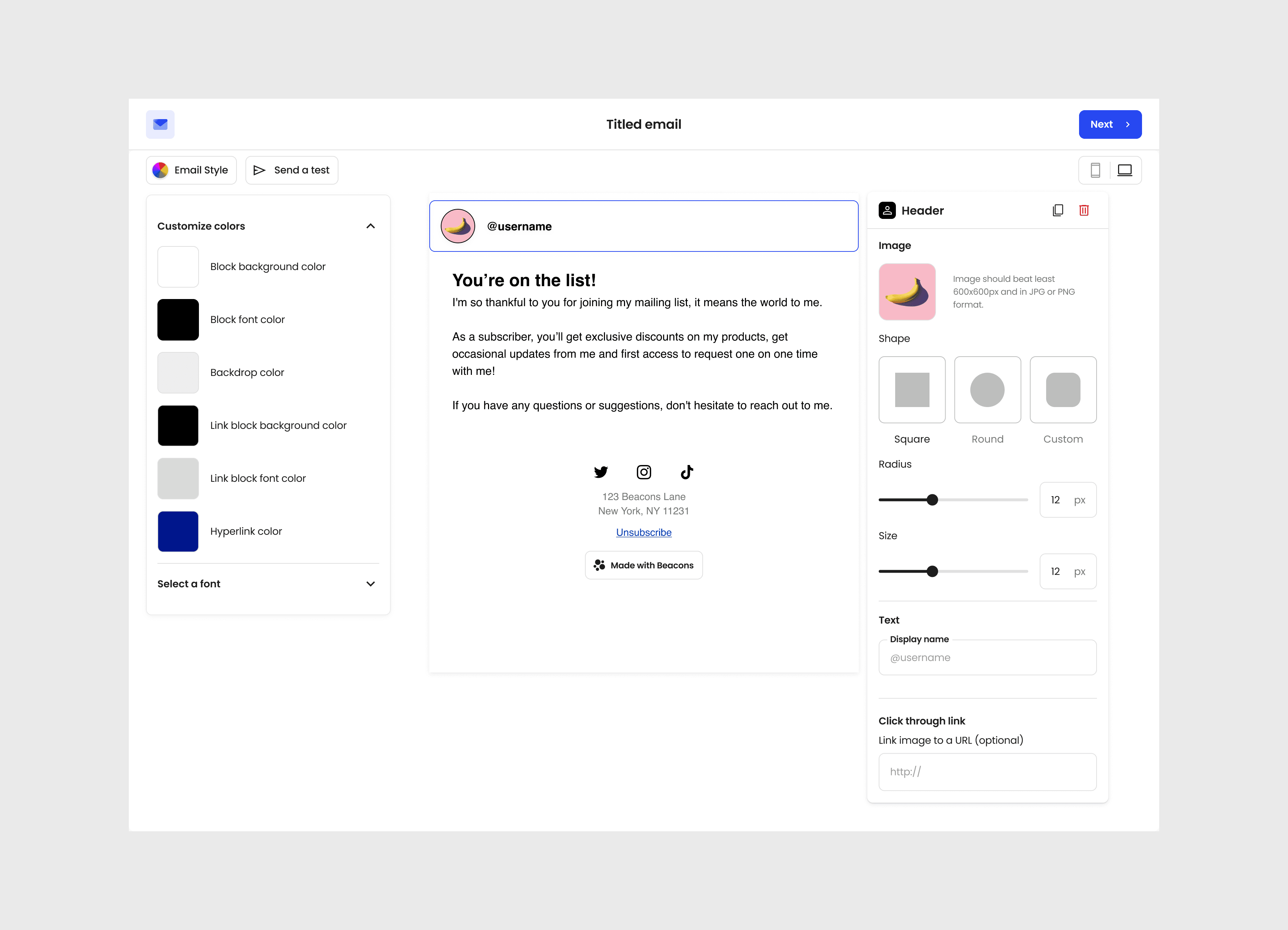
A clean, visual editor for one-off campaigns
A basic welcome automation (send when someone signs up)
Simple segmentation using tags, purchases, or custom fields
A performance dashboard (opens, clicks, unsubscribes)
We also co-developed with a set of creator design partners, incorporating feedback early and often. This let us test mental models, language (“What’s a ‘campaign’ to someone who’s never sent one?”), and flows without overbuilding.
Outcomes
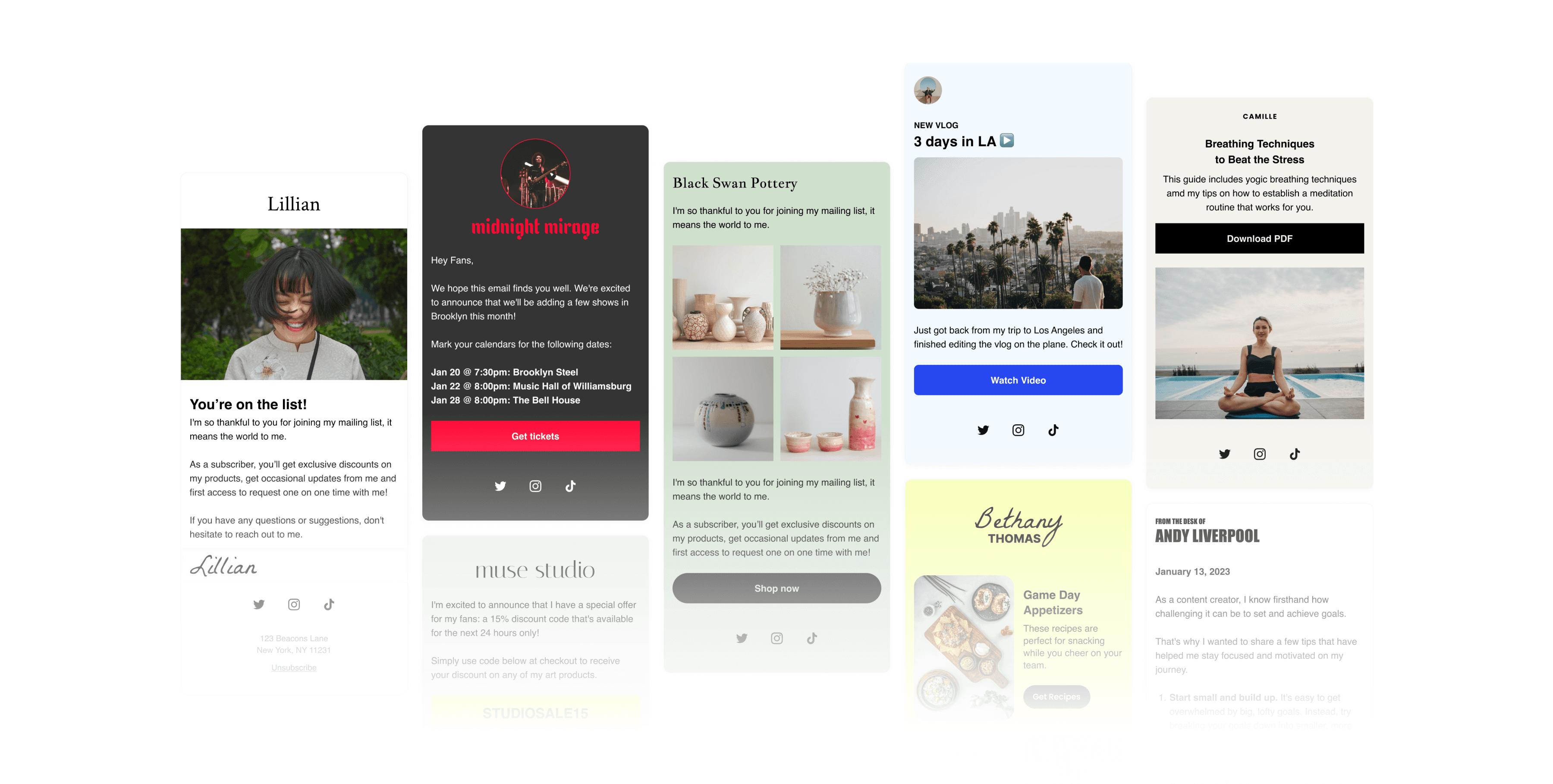
Adoption: Within 30 days, hundreds of creators sent their first-ever campaign from Beacons.
Engagement: DAUs increased as creators returned to send follow-ups, announce drops, and check performance.
Strategic value: Email became a critical re-engagement surface, completing our growth loop.
We turned a leaky part of the funnel into a sticky channel—and gave creators a new muscle to grow their business.
Reflection
From Zero to One:
“Doing what we already know how to do takes the world from 1 to n. But every time we create something new, we go from 0 to 1.”
This project was about choosing not to replicate. Instead of mimicking Mailchimp, we focused on a different audience with different needs. We built from first principles: what does “email” mean for someone selling digital art or drop-shipping lashes?
It reminded me that design isn’t just how something looks—it’s how something feels when you’re doing it for the first time.