Redesigning Beacons’ Mobile App
In early 2024, I led a comprehensive redesign of Beacons’ mobile app, rethinking how creators navigate and engage with our suite of tools. While the product had evolved rapidly, the mobile experience hadn’t kept pace—leaving users overwhelmed and disoriented. I recognized that this wasn’t just a visual design problem. It was a foundational information architecture (IA) issue—one that, if solved, could unlock usability, adoption, and long-term product growth.
To move this forward, I had to get buy-in from PMs and our CTO. By tying usability issues back to our company goals and using VidCon as a forcing function, I made the case that mobile IA needed to be prioritized—not just polished.
The Problem
Beacons is a mobile-first platform used by creators, but our mobile IA didn’t reflect that. During a team audit of the "golden path" from signup to selling, we uncovered friction at every stage:
Navigation was inconsistent and disorienting—users relied on a hamburger menu tucked away in the top-left corner, while the bottom navigation changed contextually depending on the app they were in.
Primary pages were cluttered with multiple competing CTAs and no clear hierarchy.
Key actions—like adding products or editing a page—were buried, making it difficult for new users to get started.
This wasn’t just a UX issue. It directly impacted feature adoption, retention, and onboarding success, especially ahead of a major event like VidCon, where mobile would be our primary testing ground.

The Process
This work began with a cross-functional product audit. I facilitated usability reviews of our mobile flows and mapped every point of friction from onboarding to editing a store page. I then synthesized this into a clear narrative backed by examples, visuals, and competitive analysis (Airbnb, Shopify, Slack, Rippling)—showing how our current approach deviated from established mobile patterns.
Here's how I created alignment:
Presented the case to PMs and the CTO, framing IA work as a growth unlock, not a design “nice-to-have.”
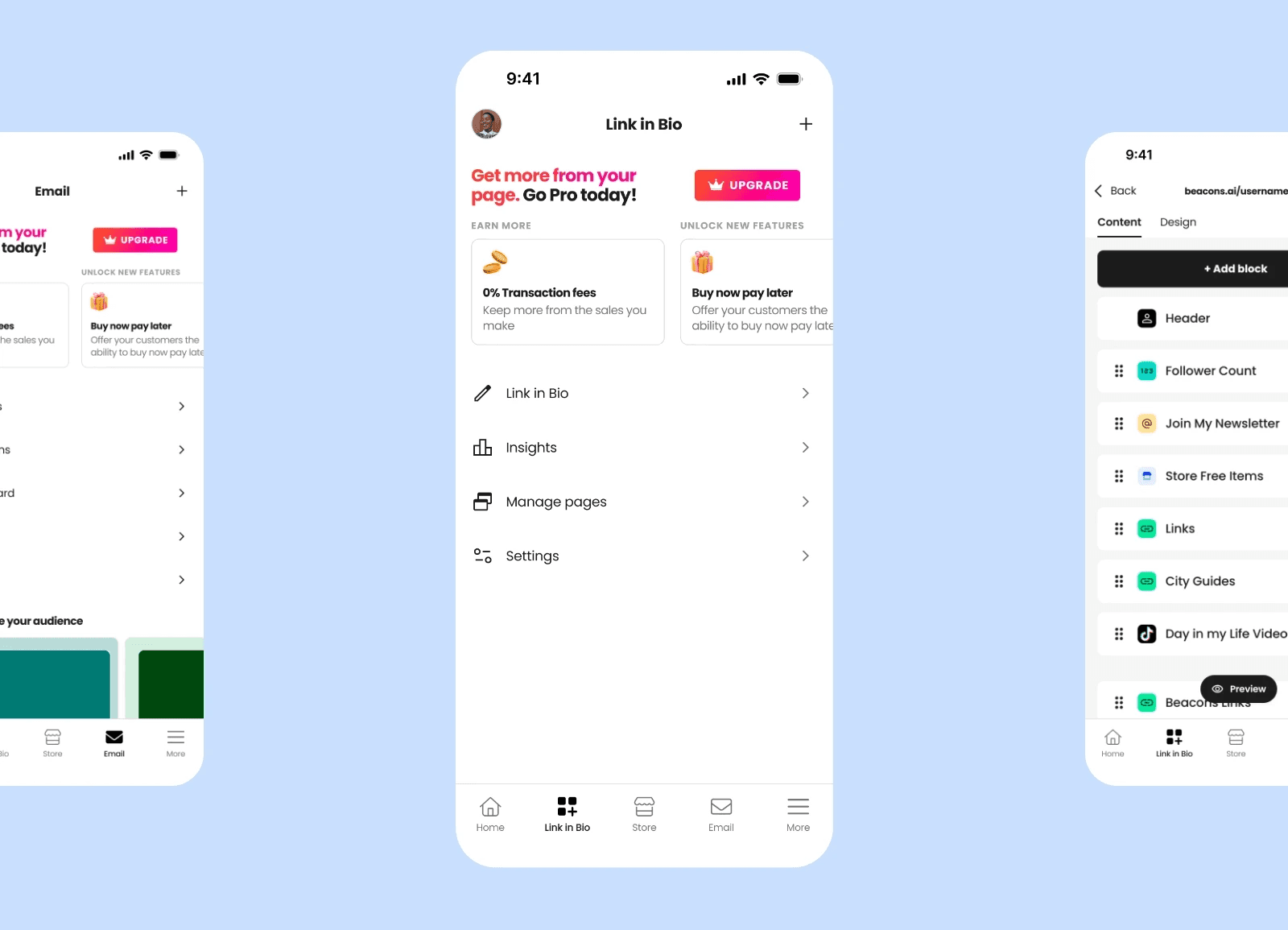
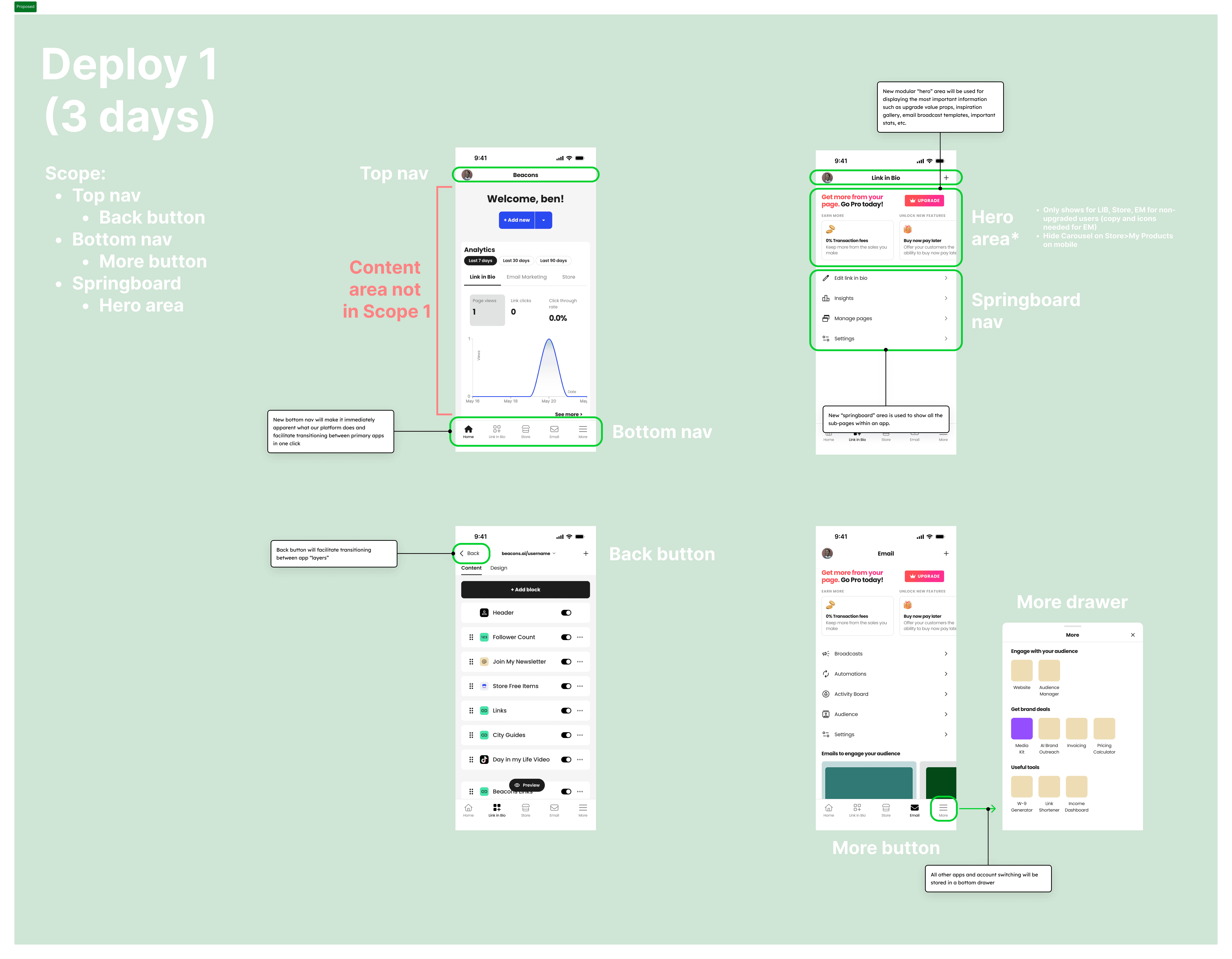
Created wireframes to illustrate springboard-style navigation, where bottom nav items led to clean landing pages that linked out to subpages (instead of cramming everything into one screen).
Proposed removing sub-page items from the bottom nav and using visual indicators like red dots to guide discovery without adding visual clutter.
Recommended rethinking the hamburger menu to reserve it for low-frequency settings or reference pages.
This wasn’t just about making things look better—it was about helping users move with clarity and intention.
Outcomes
While rollout is still in progress, the redesign had immediate impact.
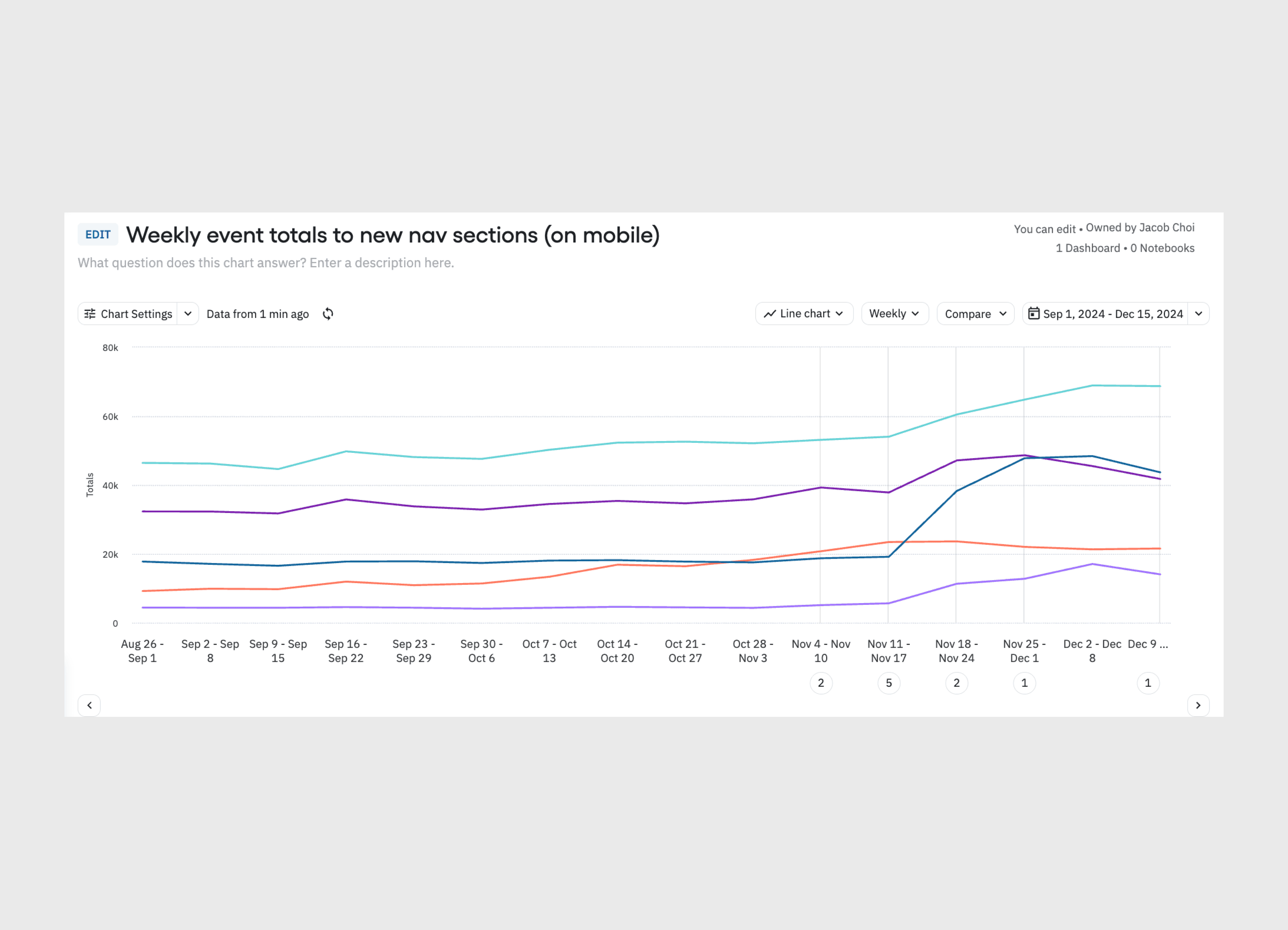
Amplitude chart above illustrates the inflection point where weekly visitors went from 20k per section to 40k+ after redesign
Company-wide alignment: We secured buy-in to prioritize IA work as a core mobile initiative ahead of VidCon.
Clearer design direction: We defined a reusable navigation pattern that scales across our growing app ecosystem.
Improved usability foundations: Our redesign reduced cognitive load, improved discoverability, and created room for product growth across core features like Link-in-Bio, Store, and Email.
Reflection
This work was a reminder that sometimes the most meaningful design work isn’t flashy UI—it’s the structural clarity that makes everything else possible. I’m proud of how we moved quickly, aligned the team, and laid the groundwork for a more intuitive, scalable mobile experience.